


 03 9070 5784
 Help & Support
 Track My Order



Recently Viewed
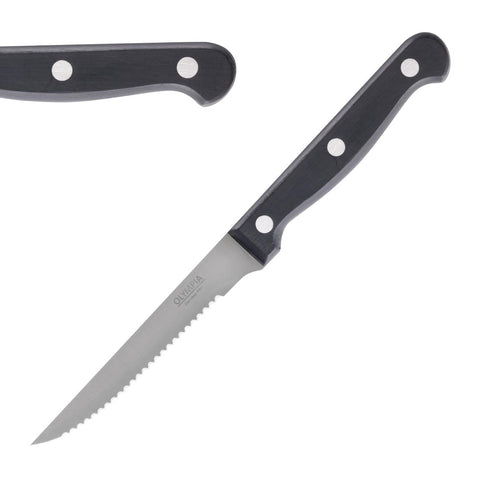

 Olympia Steak Knife Black Handle (12 Pack) - C134

 Olympia Steak Forks Wood Effect Handle (12 Pack) - HZ971

 Olympia Steak Knives Wood Effect Handle (12 Pack) - HZ970
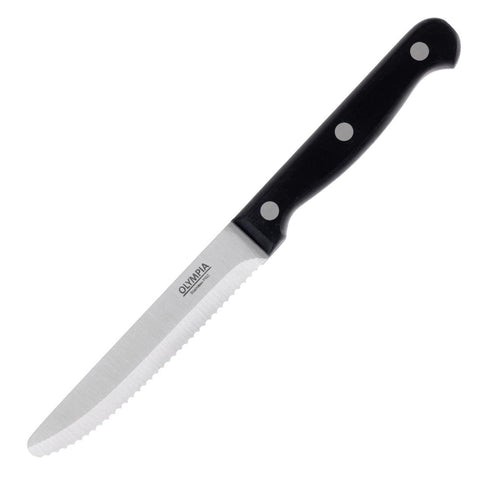
 Special Offer Olympia Rounded Steak Knives Black (60 Pack) - HU764
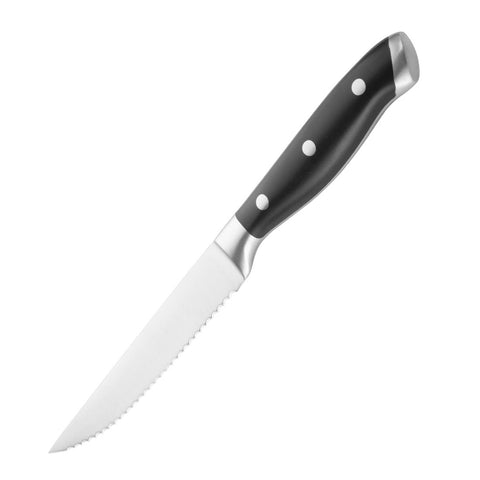
 Olympia Premium Riveted Steak Knives with Black ABS Handles (6 pack) - GR919
23(W) x 16(H) x 243(D)mm
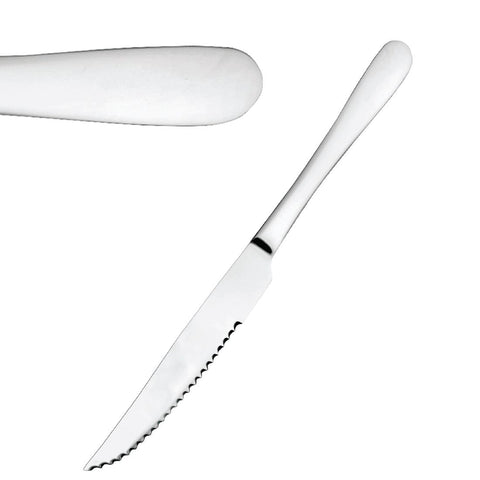
 Olympia Buckingham Steak Knife (12 Pack) - HC538
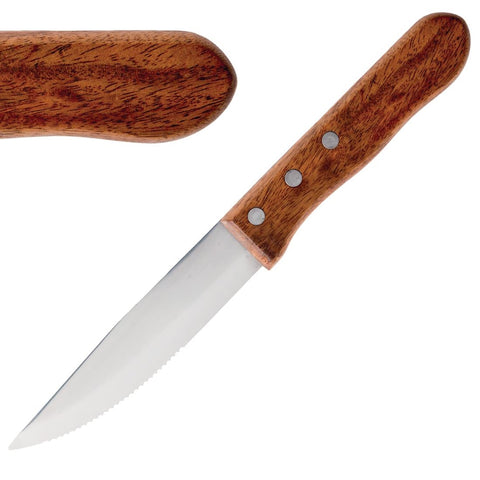
 Olympia Jumbo Steak Knives Rosewood Handle 250mm (12 Pack) - GG819
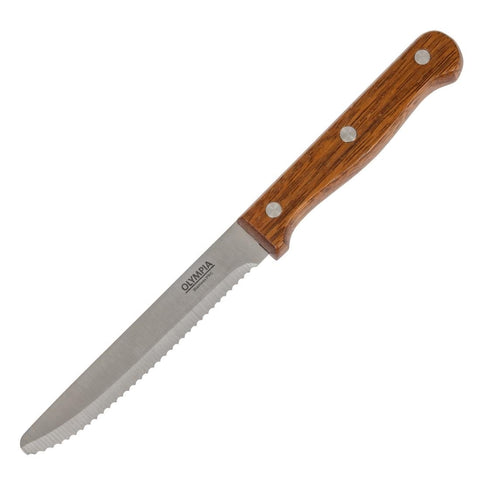
 Olympia Rounded Steak Knives Wood (12 Pack) - CS717
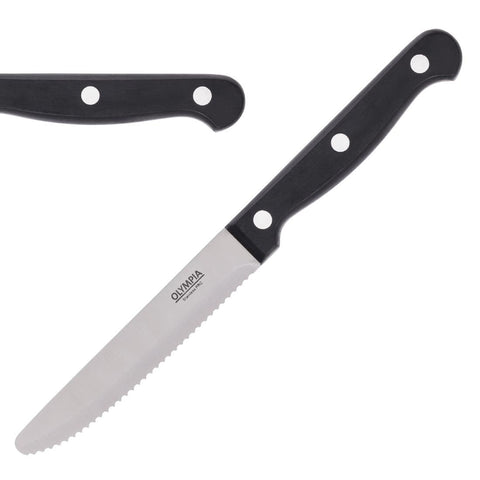
 Olympia Rounded Steak Knives Black (12 Pack) - CS716
19(W) x 15(H) x 215(D)mm
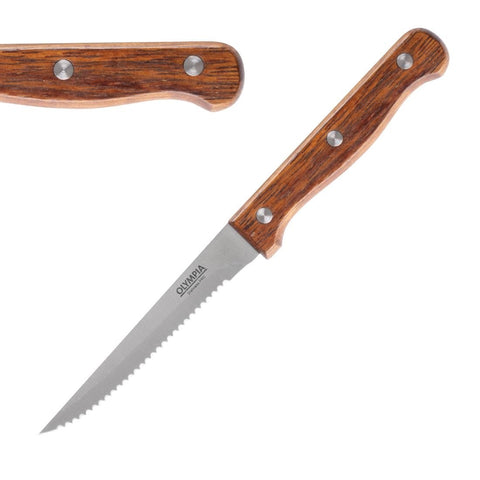
 Olympia Steak Knife Wooden Handle (12 Pack) - C136
Steak knives are the table knives a venue puts out with a steak, sharp enough to cut through a seared crust without the customer sawing at it. Olympia is one of many brands that offer them, and the packs available online run from six knives up to sixty, with black ABS, timber, wood effect and rosewood handles.
Most steak knives sold in Australia are serrated, because a serrated edge saws through a crust and keeps cutting long after a plain edge has gone dull against a plate. A serrated edge can't be sharpened in any practical way, so those knives get replaced instead of maintained. A plain edge cuts more cleanly and suits a white tablecloth room, but it needs sharpening and it blunts fast.
The handle decides whether they can go through a dishwasher. One-piece stainless and moulded ABS handles wash and dry in a commercial machine without trouble. Real timber and rosewood do not — the hot wash and the drying cycle dry the wood out, it swells and splits around the rivets and the handle eventually works loose. Wood effect handles are moulded plastic made to look like timber, which is exactly why they exist.
Buy for the busiest service and then some. Count the covers at the peak, allow for the turns and add a third on top, because they leave with the plate scrapings, get binned by accident and get taken home. Olympia offers the Buckingham, a premium riveted six pack with black ABS handles, rounded knives in black and wood, a 250mm jumbo in rosewood and matching steak forks in a twelve pack. REO prices are sharp and the price per knife drops a long way at the sixty pack.
Work out the covers at your busiest sitting, multiply by the number of turns the room does, then add a third. If forty steaks go out on a Saturday night across two turns, eighty is the working number and around a hundred and ten is what to own. The extra covers the ones in the wash, the ones that have gone missing and the ones that turn up bent.
Packs of twelve suit a small dining room and let you build the number up slowly. A sixty pack is the buy for a function room, a pub bistro or a caterer, and the price per knife is a lot better at that quantity. Whatever you buy, keep them all the same pattern, because a table set with two different knives is obvious to the customer.
Serrated is the practical choice for most venues. The teeth bite through a seared crust and through gristle without any pressure from the customer, and the knife keeps working for years without ever being sharpened. The cut is slightly rougher, which nobody notices on a steak.
A plain edge gives a cleaner cut and looks more considered on the table, so it belongs in fine dining. It also blunts quickly, because every cut ends on a hard plate, and it has to be sharpened to stay worth having. If nobody in the kitchen is going to sharpen forty knives on a schedule, buy serrated.
Not in any way that's worth the labour. The teeth are ground on one side and each scallop would need doing individually with a tapered rod, and a pull-through sharpener just flattens the points off and ruins the knife. Serrated table knives are treated as a consumable.
What you can do is make them last. Keep them off the floor, don't let them get scraped along a plate stack, and take the bent and blackened ones out of service rather than letting them go back on the table. Replace in whole packs so the setting stays consistent.
ABS and one-piece stainless will, indefinitely. Wood effect handles are moulded plastic and go through the machine as well, which is the whole reason that pattern is made. Real timber and rosewood handles will not last — the wash dries the timber out, water gets in around the rivets and the scales split or loosen inside a season.
Wash timber handles by hand and dry them immediately. Whatever the handle, don't leave knives soaking in a tub or sitting wet in a rack overnight. Stainless blades spot and eventually pit if they're left damp, and the marks won't polish out once they've set in.
Rounded tips are the safer choice for a general dining room. They don't spear a tablecloth or a napkin, they're less alarming on a table with children at it, and they cut a steak perfectly well because the work is done by the edge, not the point.
A pointed tip suits a steakhouse or a room where the knife is part of the presentation, and it's slightly better for picking meat off a bone or a rib. It also makes the knives more of a handling risk for staff clearing plates at speed, so give the wash-up a proper container to drop them into.
ABS is the workhorse. It's dishwasher safe, it doesn't absorb anything, it doesn't split, and a riveted ABS handle looks sharp on a black-and-white table setting. Wood effect gives the warmer look of timber with the same wash-and-forget behaviour.
Real timber and rosewood look and feel better in the hand, and they suit a room where the table setting is part of the price of the meal. They cost more to own, because they need hand washing and they get replaced sooner. They're worth it where the presentation justifies the extra labour at the wash-up.
A standard table knife handles most cuts. For a large rump, a tomahawk, a rib on the bone or a shared board, a jumbo knife with a 250mm overall length gives more blade to work with and more handle to hold, and it looks proportionate next to a big plate.
Venues that run both usually keep the jumbo knives for the larger cuts and the standard knives for everything else, which also stops the big ones disappearing into general service. If the menu is mostly big cuts, make the jumbo the standard and don't split the setting.
Only if the rest of the table setting justifies it. A matching steak fork is heavier and more substantial than the standard fork in a cutlery setting, and on a steakhouse table it looks right beside the knife. Olympia offers forks in a wood effect handle to match the knives in a twelve pack.
Plenty of good venues put a steak knife out with their standard fork and nobody thinks twice. If your existing cutlery is light or a different finish, the mismatch shows up next to a heavy knife, and that's the case for buying the pair.
Knives that cut in the kitchen before they reach the table. Chef knives covers the cooks, boning and carving knives for portioning and trimming, and a sharp carving knife on the pass makes a bigger difference to a steak than the table knife does.
Then storage and the setting. Cutlery storage covers the trays and boxes that keep knives sorted and off the bench, and crockery covers the plates and boards the steak goes out on. Buy a container for the wash-up to drop knives into, so nobody reaches into a sink and finds one.

We have a special page just for stock that's warehoused in Perth.
Click Here to see all WA stock