


 03 9070 5784
 Help & Support
 Track My Order



Recently Viewed
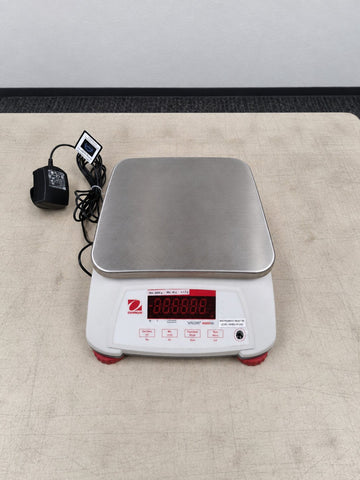

 Ohaus Valor 4000 V41PWE6T Digital Bench Scale - 908239
280W x 256D x 121Hmm


 Vitras Dual Display 30kg Waterproof Portion Scale - PSC9502
305(W) x 107(H) x 250(D)mm
 Vitras 5kg Small Scale - PSC0022
215(W) x 50(H) x 160(D)mm
 Vitras 150kg Platform Trolley Scale - PSC9215
615(W) x 657(H) x 320(D)mm

 Vogue Digital Bench Scale - 30kg Capacity - CD564-A

 Vogue Platform Scale 15kg - HZ323
286(W) x 98(H) x 243(D)mm

 Vogue Platform Scale - 30kg - HZ324
286(W) x 96(H) x 244(D)mm

 Vogue Kitchen Scale Flat Top 20kg/44lbs -Grad. 50g/2oz - F175

 Vogue Kitchen Scale Bowl Top - 20kg Grad. 50g - F176

 Vogue Kitchen Scale Bowl Top 10kg - Grad. 50g - F174

 Vogue Kitchen Scale Bowl Top 5Kg - Grad. 20g - F172
142(W) x 217(H) x 204(D)mm

 Vogue Digital Black Rectangular Scale 10kg - FS488
248(W) x 28(H) x 196(D)mm

 Vogue Bowl Digital Scale 5kg - FS487
218(W) x 108(H) x 217(D)mm

 Digital Scale - SCDG33WD
Commercial kitchen scales weigh what goes on the plate and what comes in the back door: portions on the line, ingredients for prep, and deliveries checked against the invoice. Weigh the portion and you know what it costs. Judge it by eye and it drifts upward over a service.
There are three jobs and they want different scales. A bench scale for prep and portioning, which is what professional kitchen scales usually means. A receiving scale for checking deliveries against the invoice, where an industrial kitchen scale with a larger platform earns its place. And a small portion scale on the line.
Commercial food scales live in a wet environment, so the things that matter are a sealed keypad, a removable platform and a display you can read from standing height. Commercial food weighing scales used at the pass also need to tare quickly, because every extra press is a second lost.
Scales pair with the containers they weigh into — see mixing bowls, gastronorm containers and measuring spoons and cups for the volume side of the same job. For temperature rather than weight, see food thermometers.
Deciding what goes on the bench, on the line and at the back door? The price guide puts capacity, graduation and platform size side by side, so you can buy two scales that cover three jobs.
A bench scale covers prep: dough, mixes, batching. A portion scale on the line weighs plates and protein. A receiving scale sits at the back door and checks what arrived.
Most kitchens need two of the three. The bench scale is the one that does the most work, so buy that one properly and economise on the others if you must. See commercial planetary mixers for what the bench scale usually feeds.
Only if you sell goods by weight to the customer — a deli counter, a butcher, a bulk-food shop. Trade measurement rules in Australia apply to the transaction, not to prep.
For prep and portion control, an ordinary commercial scale is fine. If you are weighing to sell, check the requirement with the National Measurement Institute before you buy, because a non-approved scale cannot be used for trade. See deli display fridges for the counter side of that setup.
Fine enough for the smallest thing you weigh, which is usually a spice or a raising agent rather than a portion of meat. A scale with a large capacity and coarse graduations is useless for the small end.
That is why kitchens hold two: a large-capacity scale for batching and a fine one for small weights. Each product page states the capacity and graduation; our specifications page explains how we list them.
Splash resistance is the thing to check and it is stated per model rather than assumed. A sealed membrane keypad and a stainless platform that lifts off is what makes a scale survive a kitchen.
No scale should be hosed down or put through a commercial dishwasher. Lift the platform off, wash that, and wipe the body.
Mains for anything that sits in one place and is used constantly, because flat batteries mid-service are the most common scale complaint. Battery for a receiving scale or anything that moves.
Dual-power models solve it, and are worth the small premium on a bench scale. A scale on a trolley has to be battery by definition.
A big display angled toward the operator, a tare button that is the largest key, and a platform wide enough for the plate you actually use. Everything else is secondary.
Site it where the plate is built, not beside it. If it has to be reached across, it will be skipped — the same problem as badly placed kitchen rubbish bins.
Keep it on a level, solid surface away from vibration, and recalibrate to the manufacturer's instructions. A scale on a bench next to a working mixer will read unstably.
Also keep the platform clear. Dried product under the platform is the most common cause of a scale that will not zero. A quick wipe with surface cleaner each shift prevents it.
Commercial food scales, professional kitchen scales, industrial kitchen scale, catering scales, portion scales and bench scales all cover the same ground with different emphasis.
Compare capacity, graduation, platform size and whether it is splash resistant, not the name. The rest of the range is in commercial kitchen tools.

We have a special page just for stock that's warehoused in Perth.
Click Here to see all WA stockWhat our customers say about us on Google, and how Google scores our store for things like shipping and returns.
Store scores from Google