


 03 9070 5784
 Help & Support
 Track My Order



Recently Viewed

 FryMAX 10 Conical Cooking Oil Filter Holder FM-CF

 FryMAX 50 × 10 Filter Paper Cones FM-PFC50
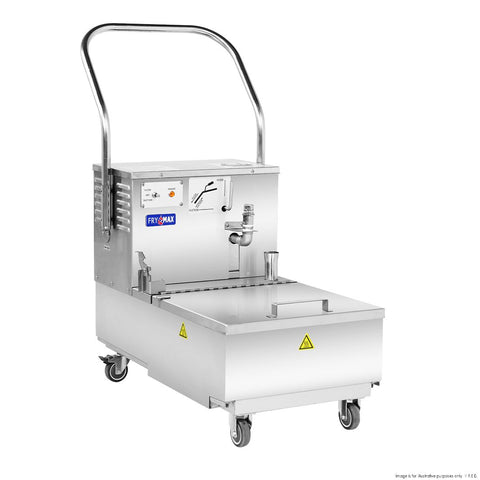
 FryMAX 42l Electric Oil Filter Machine EOF-42
457(W) x 727(D) x 914(H)mm
 Fry Essentials Fryer Cleaner And Boil Out Powder - AS-BOILOUT5KG
 FryMAX Oil Filter Powder 90 × 135g Satchels FM-PD90/135G
 FryMAX Oil Filter Powder 50 × 250g Satchels FM-PD50/250G
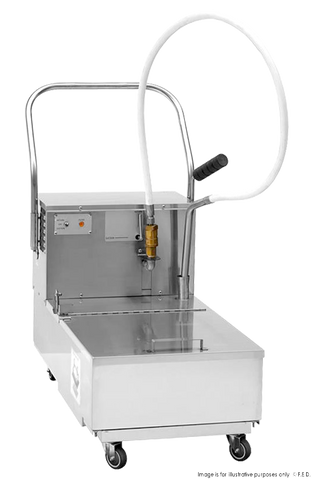
 FryMAX 25l Electric Oil Filter Machine - EOF-25
457(W) x 727(D) x 914(H)mm
 FryMAX Oil Filter Paper 100 Pcs AF-EOF100


 Jantex Oven & Grill Cleaner Ready To Use 5Ltr - FL955
190(W) x 270(H) x 130(D)mm

 CombiCLEAN DISHWASHER PACK (Clear Wash 2L + Rinse Aid 2L) - DH-PACK
 FryMAX Frymax 54L Electric Oil Filter Machine EOF-54
505(W) x 914(D) x 914(H)mm


 F.E.D Combi Care 1L - DH-CR1L


 CombiCLEAN COMBI CLEAN 1L - DH-CL1L
 CombiCLEAN RINSE AID 5LT - DH-RA5L

 VITO® Filters to Suit X Series Box of 50 - 101441
 VITO®50/80 Filters Box of 100 - to suit VITO®50 & VITO®80 - 100114
 VITO® Fryer Boil-Out Tabs - 34011090
 VITO®30 Filters Box of 100 - to suit VITO®30 - 100112
Cooking equipment cleaners strip the carbon and baked-on fat out of an oven cavity, off a hotplate and off the surrounds of the line. Everything else in a kitchen deals with fresh soil; these deal with polymerised fat, which is fat that has been cooked so many times it has effectively turned into varnish.
That is why a general-purpose spray will not shift the inside of an oven, and why a caustic oven cleaner should never be used on aluminium. Matching the product to the surface is most of the skill here, and the rest is contact time.
A good commercial cooking equipment cleaner is bought by what it is for: oven cleaner for enamel and stainless cavities, fryer boil-out for the deep fryer, and a kitchen degreaser for the surrounds, exhaust hoods and the wall behind the line.
Putting a cleaning list together for the whole line? Ask for the price guide and work out the oven, fryer and degreaser products against the surfaces you actually have.
A degreaser will handle the surrounds of all three, but the hard jobs want purpose-made products. Oven cleaner is formulated to cling to a vertical cavity wall; fryer boil-out is designed to work diluted in water at heat; grill cleaners are made to be worked on a hot plate.
Using one product for everything means it is too weak for the worst job and too aggressive for the easiest.
Aluminium, anodised surfaces, painted panels and most plastics. Caustic will dull, pit or strip them, and on aluminium the reaction is immediate and visible.
304 stainless steel, the food-safety grade used in Australian commercial kitchens, takes it well, which is why most cavities and stainless steel benches are built from it. If you are unsure what a part is made from, the manufacturer's documentation or specifications is the place to check, not a test patch.
Because carbon does not come off by force; it comes off once the chemical has softened it. Spraying and immediately wiping uses up the product and leaves the deposit, which is why the same oven gets harder to clean every week.
Apply, leave it for the time the label states, then wipe. The dwell time is the work.
Yes. A combi steam oven with an automatic wash cycle takes the tablets or cartridges its manufacturer specifies, and putting a manual oven cleaner through it can damage seals and the cleaning circuit.
Use the consumable the machine is built for. This is one place where substituting a cheaper chemical is a false economy.
That is a filtration job rather than a chemical one. Fryer filter machines and cooking oil filters extend oil life; boil-out cleans the pot once the oil is out.
Doing both on a schedule costs less than replacing oil early, and it changes how the food tastes.
Gloves and eye protection, ventilation, and never mixing products. Heavy-duty rubber gloves rather than thin disposables, because caustic goes straight through the thin ones.
Clean cooking equipment cold or barely warm unless the label says otherwise. Spraying chemical onto a hot surface creates fumes and flashes the product off before it can work.
It follows volume, not the calendar. A pizza deck running all day needs attention far more often than a function kitchen used twice a week, and the honest test is whether the deposit is still getting thicker.
Light, frequent cleaning beats a quarterly rescue. Keep a griddle scraper on the line so the daily work is actually done daily.

We have a special page just for stock that's warehoused in Perth.
Click Here to see all WA stockWhat our customers say about us on Google, and how Google scores our store for things like shipping and returns.
Store scores from Google